LLC COMFORT-ECO closely cooperates with the department of “Water supply, sewerage and drilling” at the National University of Water and Environmental Engineering (Rivne) and offers:
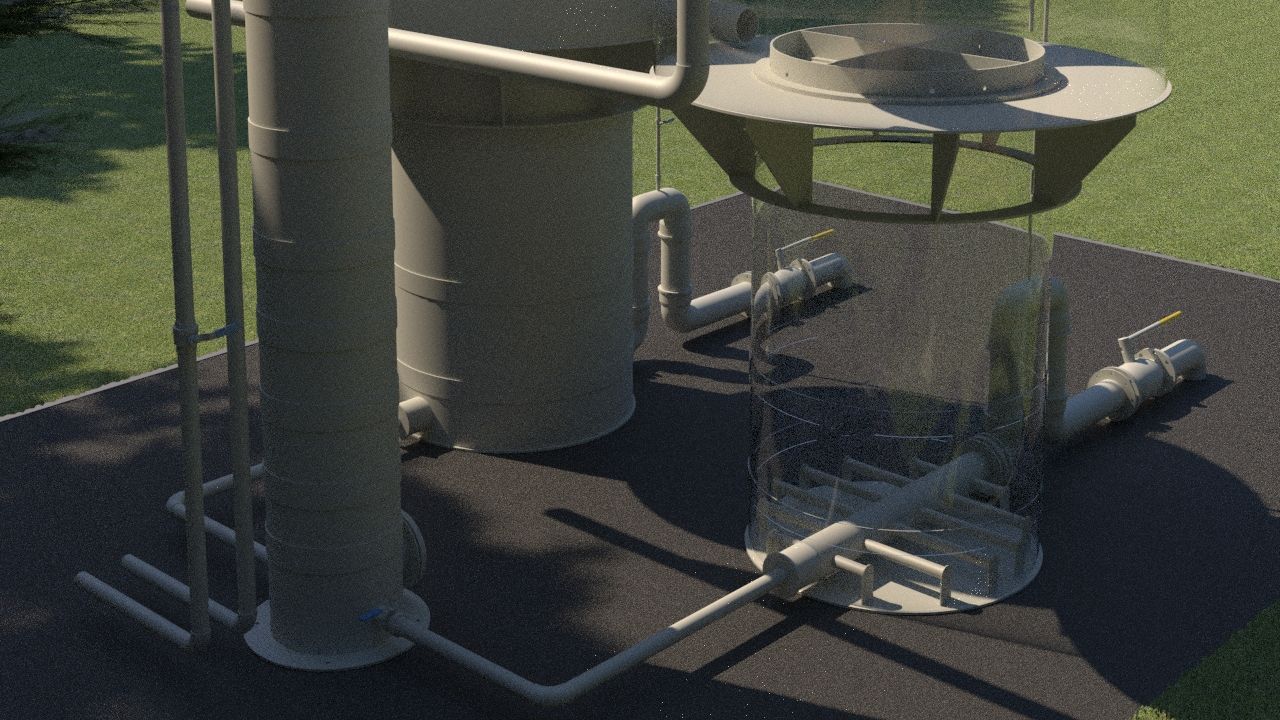
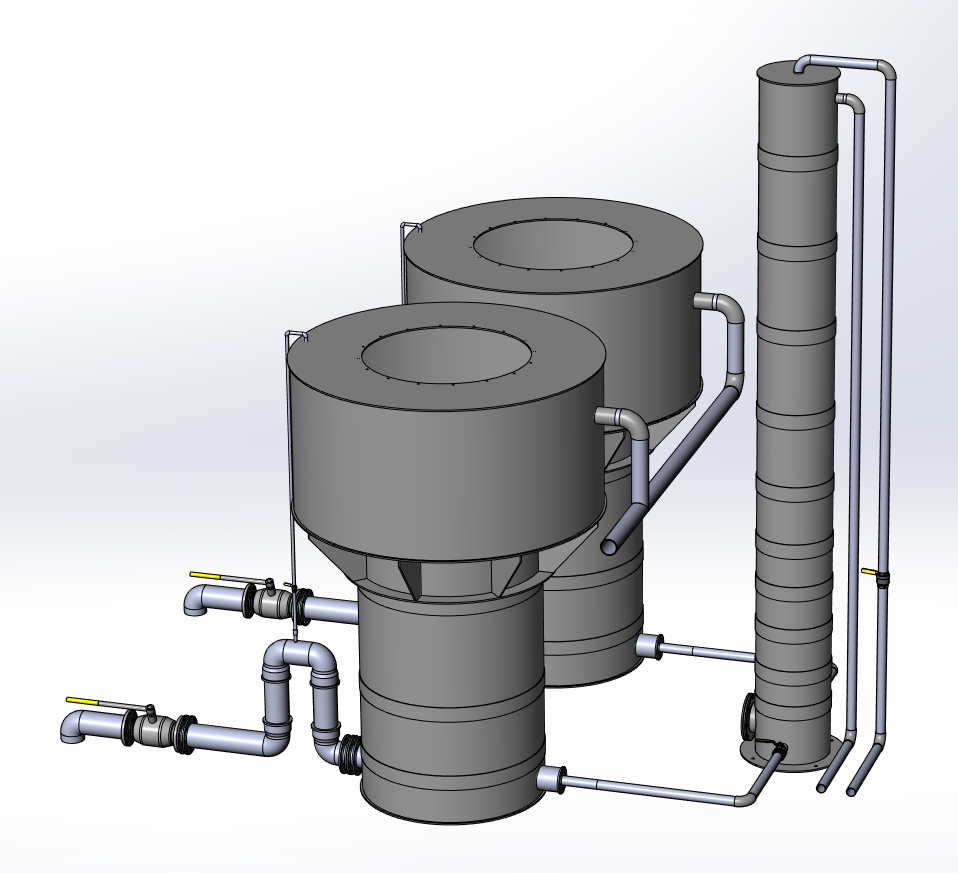
- Water deironing units with polystyrene foam filters with an upward filter flow, which are located in the open air;
- Tower-type water deironing units;
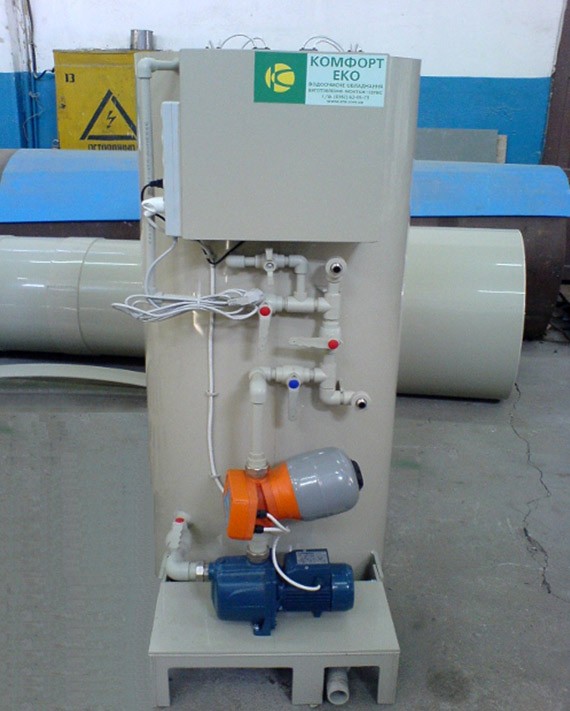
- Polystyrene foam filters for local water purification systems (private houses, cottages, hotels, etc.).
- Complex drinking water purification plants “OZZON”: OZZON office; OZZON-1.5; OZZON-3.
DRINKING WATER PURIFICATION UNITS COMFORT-ECO
PURIFICATION QUALITY INDICATORS
|
Name of indicators |
Before purification |
After purification |
|
Total iron, mg/dm3 |
up to 16 |
less than 0.2 |
|
Turbidity, NTU*, mg/dm3 |
up to 50 |
less than 2 |
|
Hydrogen sulfide, mg/dm3 |
up to 2 |
removed |
|
Color, color units |
up to 50 |
less than 20 |
|
Total hardness, mol/dm3 |
up to 9 |
less than 7 |
|
Manganese, mg/dm3 |
up to 2 |
less than 0.05 |
|
Residual free chlorine, mg/dm3 |
up to 2 |
removed |
|
рН |
6.5 – 8.5 |
6.5 – 8.5 |
WATER TREATMENT AND WATER PURIFICATION: COMPLEX ADVANTAGES
- Groundwater purification according to the standard requirements of the State Sanitary and Epidemiological Norms 2.2.4-171-10 “Hygienic Requirements for Drinking Water Intended for Human Consumption”;
- Compactness of the complex and, as a result, reduction of the usable area;
- No need for maintenance personnel;
- Significant reduction in the volume of backwash water;
- Reduction of energy consumption;
- Ozone disinfection of water (as an additional function);
- High reliability and low maintenance costs.
NITRATE PURIFICATION OF GROUNDWATER is based on the use of physicochemical methods (for the conversion of nitrates into a solid phase) and hydromechanical methods (for the extraction of the solid phase from water), while minimizing waste generation.
SOFTENING, DEMINERALIZATION OF GROUNDWATER OF CHLORIDE-SULPHATE TYPE to provide the required quality of purified water at low operating costs of the units and high percentage of water use. The issues of eluate utilization during the regeneration of ion exchange filters and water reuse of auxiliary operations have been resolved in contrast to existing technologies.
POLYSTYRENE FOAM FILTERS IN WATER PURIFICATION TECHNOLOGIES
About 90% of the rural population uses water from underground horizons with a high concentration of iron, including almost all the rural population of the northern, western and northeastern regions of Ukraine.
Different methods of water deironing are used depending on the quality of groundwater and other conditions. The reagent-free methods are economically feasible under favorable conditions. The design and technological parameters of filter facilities influence on efficiency, reliability and effectiveness of water deironing units, which depend on the type of filter load. Natural or artificial materials that are heavier or lighter than water can be used as a granular load. Polystyrene foam is attractive among such materials. Polystyrene foam is used in almost all areas of industry as a sound and heat insulation material, a material that replaces metal, cardboard, etc. Granular polystyrene foam is made from 3 commercial polystyrene products processed by hot water or steam. The use of industrial polystyrene foam can reduce the purchase cost and load manufacturing a few times. The undoubted advantage of this load is the possibility of simple adjustment of its particle size. The method has been developed to produce a modified polystyrene foam load that has a more developed specific surface area.
Polystyrene foam filters can be used in two-stage reagent water clarification and decolorization schemes for final water purification after settling tanks or in one-stage schemes as contact polystyrene filters, in water deironing schemes, for pretreatment of surface water, for wastewater post-treatment.
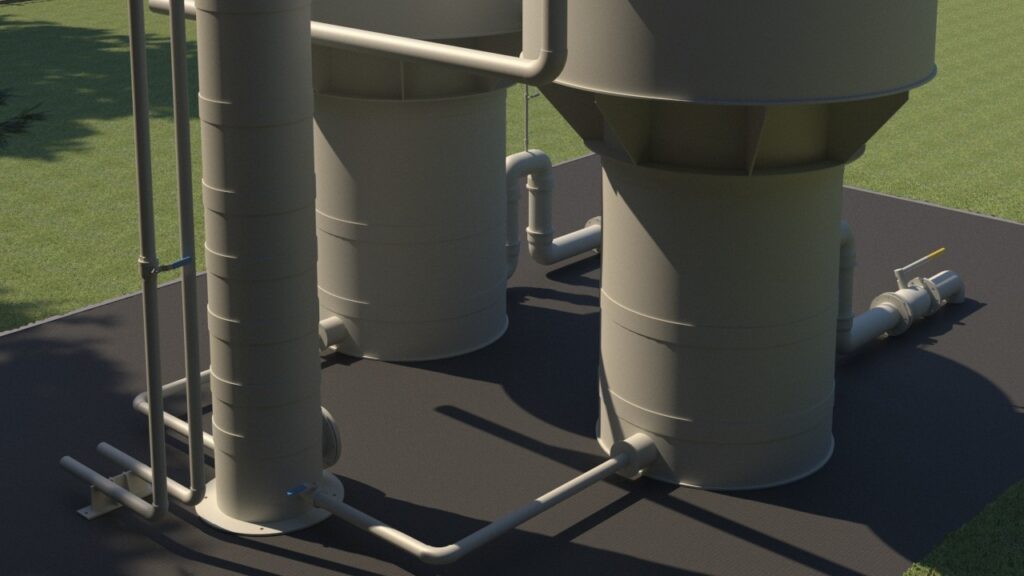
It is advisable to use non-pressure polystyrene foam filters with upward filtration (Figure) when deironing water for average and big consumers. Groundwater enters the aeration unit through pipeline 1. Different types of aerators can be used depending on the required degree of aeration and degassing water treatment: simplified aeration or enhanced aeration and degassing water treatment. Then the water enters the air separator 2. Aerated water enters the lower drainage and distribution system. Water from the underfiltration space passes through the loading layer 4, where iron compounds are retained. The polystyrene foam loading 4 is kept flooded by a special design with a retaining grid 5, which consists of a mesh attached to the frame. The deironed water is collected in the filter’s over-filter space and is discharged to the water tanks by pipeline 6. The polystyrene foam load is washed by deironed water from the over-filter space. It is made common for several filters in order to reduce the height of the filter space. The filter can be switched from filtering mode to washing one and vice versa manually, using electrically operated shut-off equipment or a non-fitting scheme.